Texas launches accessible, standardized web design system to modernize agency sites
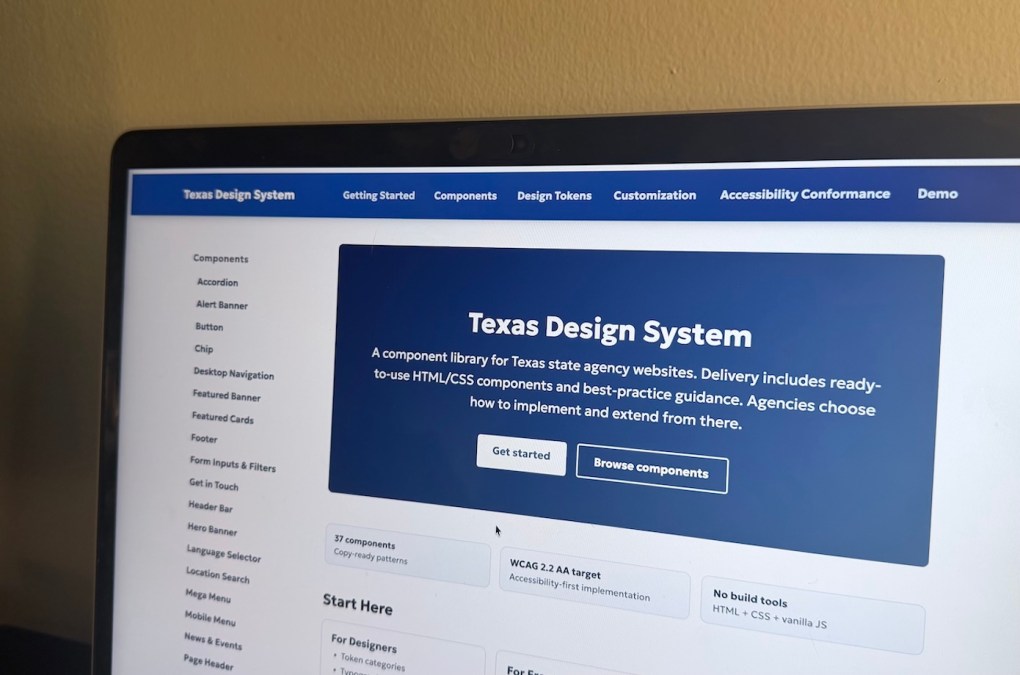
The Texas Department of Information Resources on Tuesday announced the launch of the Texas Design System, a new content library of accessible, standardized website components to help the state modernize its websites.
The web design system fulfills the legislative mandate of last year’s state House Bill 5195, which directs Texas agencies to improve the user accessibility, navigation, responsive design and efficiency of digital services across their websites and online service portals. The legislation also required DIR to develop statewide guidance for agencies in their modernization process, which can be found on its website, and to assist agencies with those improvements.
A cross-agency website modernization workgroup helped to develop the system, which is intended to serve “as a one-stop shop for agencies working to meet website modernization requirements,” a news release said. The system offers 37 ready-to-use website components that include standardized templates for navigation menus, online forms, search functionality, alerts, responsive layouts and service-focused content pages commonly used across government websites.
While the system includes standardized headers, footers, buttons, cards, menus, and page layouts intended to create a familiar and consistent look across Texas government websites so Texans can immediately recognize them, it still allows agencies flexibility with their preferred branding, colors and typography.
It was also built to comply with the Web Content Accessibility Guidelines 2.2 AA standards, the leading standard for web accessibility, developed by the World Wide Web Consortium. The components are compatible with screen readers and other assistive technologies, while remaining functional across desktop computers, tablets and mobile devices.
“Accessibility is a fundamental component for Texans accessing government services online,” Marie Cohan, DIR’s statewide digital accessibility officer, said in a statement, “The Texas Design System gives agencies practical, easy-to-use tools to create digital experiences that are more accessible, mobile-friendly, and easier to navigate for Texans of all abilities.”
Design systems are becoming more popular across state governments. According to a recent report by the U.S. Web Design System, shared web design across government agencies allows users to have more uniform experiences across departments and lessens the burden on digital services teams so they don’t have to reinvent new elements with each new website.
With the addition of Texas this week, 19 states now have centralized, live design systems, with other states in varying phases of development, according to a tracker from the Digital Government Hub at the Beeck Center for Social Impact and Innovation at Georgetown University.